Schimmelfreies Kinderzimmer

mould in the nursery

Mould in the Nursery: A Lasting Solution for Damp Walls

Understand mould. Protect your rooms.

 Mould in the Nursery: Stop Damp Walls Without Chemicals

Mould-DRY targets the areas where mould develops: cold, damp wall surfaces. Discover the causes, risks and long-term solution.

schimmelfrei lernen im Kinderzimmer

Address the cause, not the symptom

Recognising mould in the nursery before it spreads

Mould in the nursery is not always first noticed as a visible patch. A damp, earthy or musty smell can be the early warning that makes parents pause, especially after moisture-heavy periods. Visible marks are important, but the absence of a visible mark does not prove that the wall is dry. Mould can be connected to moisture held in the wall, while spores may also be present in the room air.

For babies, this uncertainty is particularly worrying. Infants spend long periods in the nursery and cannot explain whether a room feels uncomfortable. That is why a nursery should not be treated as a place for cosmetic cover-ups or quick surface cleaning alone. A stained area may be the visible symptom; the moisture behind or within the wall remains the decisive issue.

Notice the warning signs

Take a musty nursery smell, recurring marks or damp-looking wall areas seriously.

Separate surface from cause

Do not assume that removing what is visible has dried the wall underneath.

Choose a lasting response

Focus on reducing wall moisture rather than masking the affected area.

A mould issue around windows belongs to its own cause assessment; see mould around windows. Where the concern is a nursery wall, Mould in the children’s room provides the relevant room-specific context.

schimmelfrei spielen im kinderzimmer
Go to Shop
schimmel im kinderzimmer

Räume im Fokus

Drying the nursery wall with Mould DRY

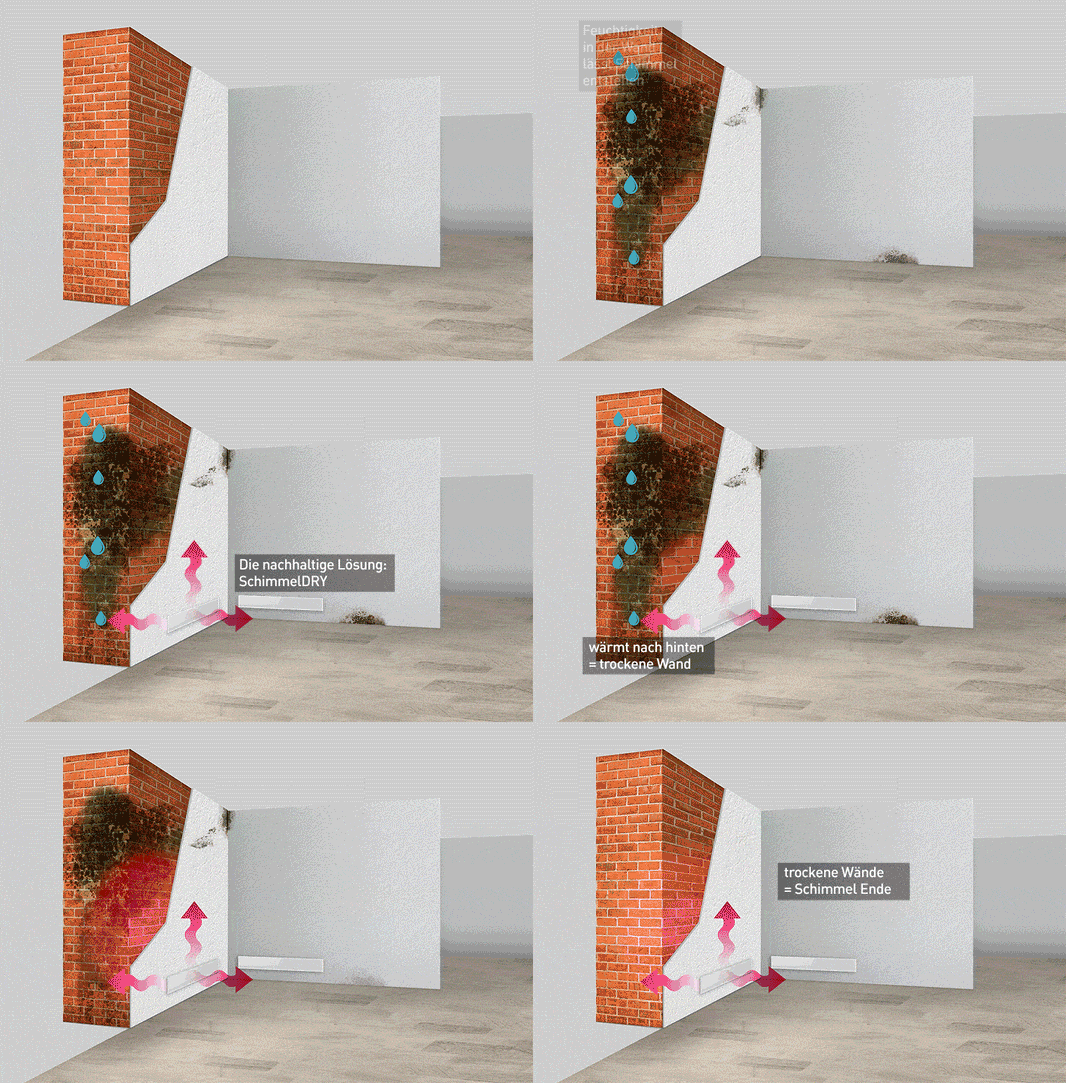
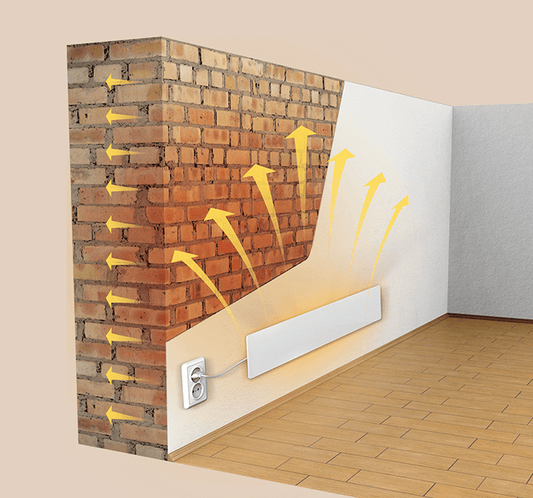
Mould DRY is designed to address the condition that enables mould: damp wall material. Its chemical-free infrared wall-drying approach works on the wall rather than merely treating a visible mark. By supporting permanently dry walls, it offers a route away from recurring mould cycles, temporary air measures and cosmetic surface fixes.

This focus is especially relevant where a nursery has a persistent musty smell or repeated mould marks despite attempts to clean the surface. Instead of adding chemicals to a room intended for a baby, Mould DRY targets the underlying moisture and condensation conditions in the affected wall. Ventilation can remain a helpful complement, but it is not the complete solution when moisture is retained in the wall.

For mould in the nursery, the lasting answer is not to hide the surface—it is to dry the wall without chemicals.

Chemical-free wall drying

Mould DRY uses infrared technology instead of chemical sprays.

Cause-focused approach

It targets damp wall conditions rather than only visible mould.

Built for lasting prevention

Dry walls reduce the conditions in which mould can return.

Causes of mould growth in the nursery:

Why are nurseries particularly vulnerable?

High humidity and inadequate ventilation create ideal conditions for mould. Moisture provides the basis for mould growth, making rooms affected by damp particularly vulnerable. In nurseries, which are often kept warm and ventilated less frequently, moisture can condense in cool corners and around thermal bridges, including cold wall and window areas, allowing mould to develop.

View full details
FAQ

Frequently asked questions & answers

Is a musty smell in the nursery a sign of mould?
  • A musty, damp or earthy smell can be an important warning sign, even before a mould patch becomes visible. It may indicate that moisture is present in or around the wall. Rather than relying on a room fragrance, surface cleaner or air treatment, address the wall moisture that allows the smell and mould conditions to persist.
Are air purifiers enough for mould in a nursery?
  • No. An air purifier may collect some airborne spores, but it does not dry a damp wall or eliminate the condition that supports mould growth. It is not a substitute for resolving wall moisture. A lasting response needs to focus on drying the affected wall.
Will a dehumidifier permanently remove nursery mould?
  • No. A dehumidifier can only temporarily influence moisture in the room air. It does not permanently dry the wall material behind recurring mould. Mould DRY is designed for chemical-free infrared wall drying so the underlying damp-wall condition is addressed.
Can chemical mould sprays solve the problem in a baby’s room?
  • Chemical sprays may affect visible mould on the surface, but they do not remove retained wall moisture. This means mould can return after the surface appears cleaner. Mould DRY avoids chemical treatment and focuses on drying the wall instead of covering or temporarily treating the symptom.
Why can mould return after the nursery wall has been cleaned?
  • Cleaning can remove or reduce what is visible, but it does not necessarily change the moisture condition in the wall. If the wall remains damp, the environment for recurring mould remains. Lasting prevention requires wall drying, not simply a cleaner surface.
What should be the priority when mould is found near nursery windows or walls?
  • The priority is identifying whether the concern is confined to the surface or linked to wall moisture. For window-related mould, seemould around windows. For nursery wall moisture, Mould DRY provides a chemical-free, cause-focused drying approach.
Can Mould-DRY be installed near a bed in a nursery?
  • Mould-DRY can be safely installed behind, beside or beneath the bed of babies and young children. However, accidental contact while sleeping should be avoided.
  • A warmer wall can also make sleep more comfortable and restful.
Does Mould-DRY pose a fire risk in a nursery?
  • Mould-DRY reaches a surface temperature of approximately 70°C during operation. For safe use, always follow the installation instructions, maintain a clearance of at least 2 cm from furniture, curtains and other objects, and never cover the module.
Can children burn themselves on the Mould-DRY heating element?
  • The front and rear surfaces of the Mould-DRY modules can reach approximately 70°C. Direct or prolonged contact should therefore be avoided, particularly by children. Position the module where it cannot be touched accidentally and keep it out of children’s reach wherever possible.
No matching question found.

Would you like advice by phone?

Our service team is available by phone and will help you find the right solution for damp and mould.

📞 +43 4212 46715 Mon–Thu | 09:00–16:00 • Fri | 09:00–16:00

Put an end to mould!

Mould-DRY eliminates mould and helps prevent it from returning – simply and safely.